
Healthcare and industrial projects are often grouped together as “complex construction.” In reality, the risks, pressures, and operational demands behind these environments are completely different.
If your organization works on healthcare or industrial projects, understanding those differences can help you choose the right construction partner from the beginning.
Read the article below for exclusive insights from Nick Campbell, Gordon Highlander’s Senior Vice President of the Central Region, on what truly separates healthcare and industrial construction and why specialized experience matters.
Texas Growth Is Creating New Construction Needs
As more people and businesses move into Texas, demand continues to rise for healthcare and industrial facilities. Clinics, outpatient spaces, distribution centers, and industrial buildings all serve different needs, but they share one important requirement: they must be built to support real operations.
For our team, that starts with understanding the project’s purpose. We want to know how the building will be used, who it will serve, and what the owner needs it to accomplish over time.
As Senior VP Nick Campbell explains, “In healthcare, it’s surgical. It’s very precise, very detailed.” Industrial environments, by contrast, often focus on speed, heavy infrastructure, and operational scalability.
The Myth of the “Good General Contractor”
A contractor can be highly successful in one environment and still be the wrong fit for another.
“You can be a good contractor and build things well and high quality,” Nick Campbell says. “But if you don’t get communication right with the stakeholders, healthcare professionals, and infection control teams, then you’re the wrong contractor.”
Healthcare and industrial construction operate under completely different pressures. That changes how projects are planned, staffed, coordinated, and executed in the field.
A team that performs well on a fast-moving industrial site may struggle inside an occupied healthcare facility where infection control, containment, and operational coordination affect patient care every day.
In healthcare, project teams often communicate with facility staff daily, sometimes hourly, while construction happens around active patient care. Industrial teams, meanwhile, may coordinate more heavily around production schedules, logistics, infrastructure, and occupancy deadlines.
Healthcare Construction Requires Careful Planning
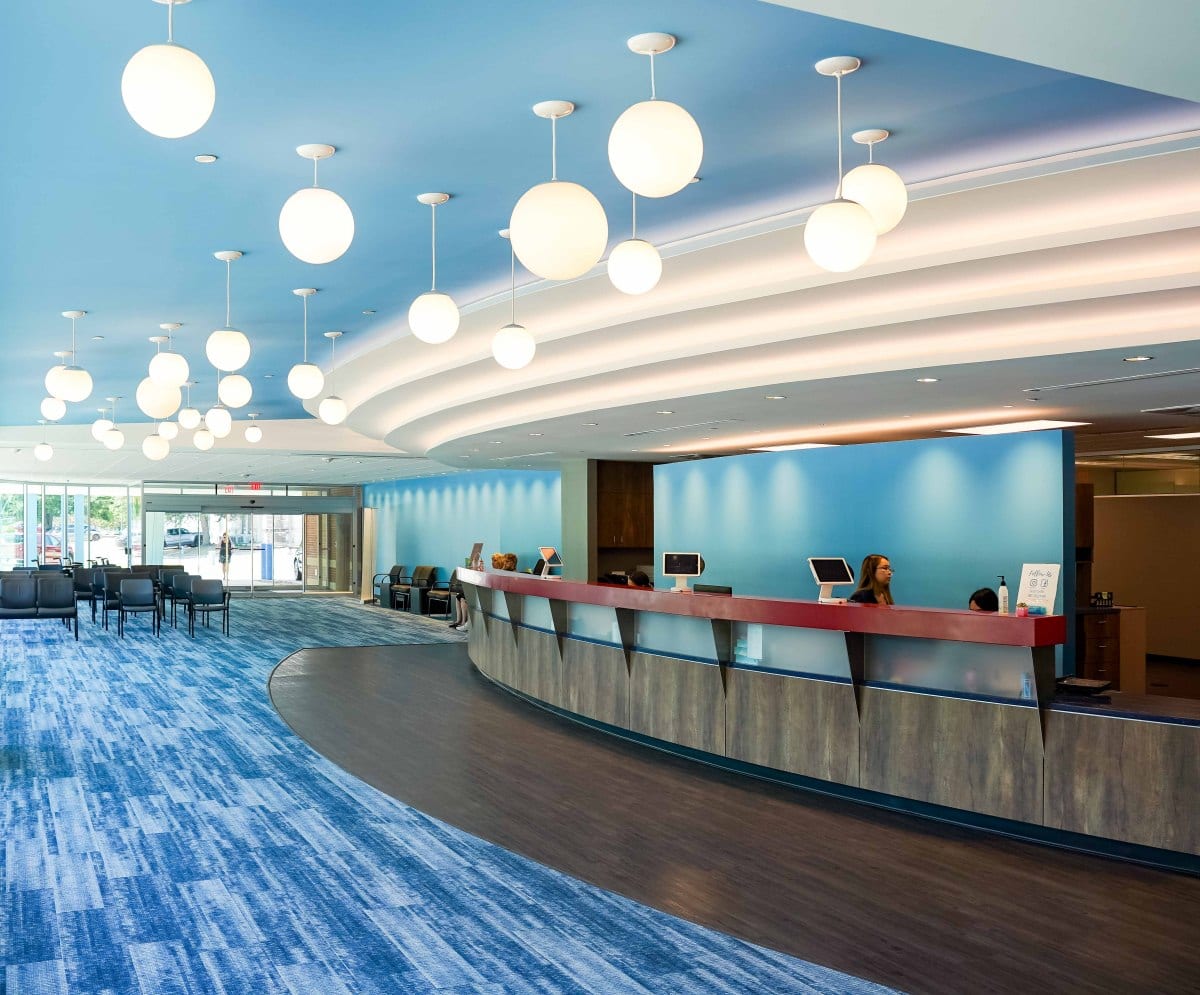
In many healthcare environments, construction occurs while the facility remains operational. Teams are working around patients, providers, staff, and sensitive building systems every day.
Our healthcare renovation experience, including projects like Plano Orthopedics and Fountain Life, shapes how our team approaches occupied medical environments with close attention to:
- Infection control and air quality
- Noise and vibration management
- Life safety coordination
- Shutdown planning and communication
- Active facility workflows
Healthcare construction also often happens in phases to minimize disruption to patient care. Teams may work one room at a time, adjust schedules around hospital operations, or pivot quickly based on changing facility needs. That flexibility requires constant communication and coordination throughout the project.
For Nick Campbell, that responsibility is part of what makes healthcare construction meaningful. “There’s a higher purpose behind that project,” he says. “Whatever room I just built here, there’s going to be a patient that receives care in that room.”
Industrial Facilities Must Be Built for Performance
Industrial construction is also changing across Texas. As logistics and supply chain needs continue to evolve, owners need facilities that are efficient, durable, and adaptable.
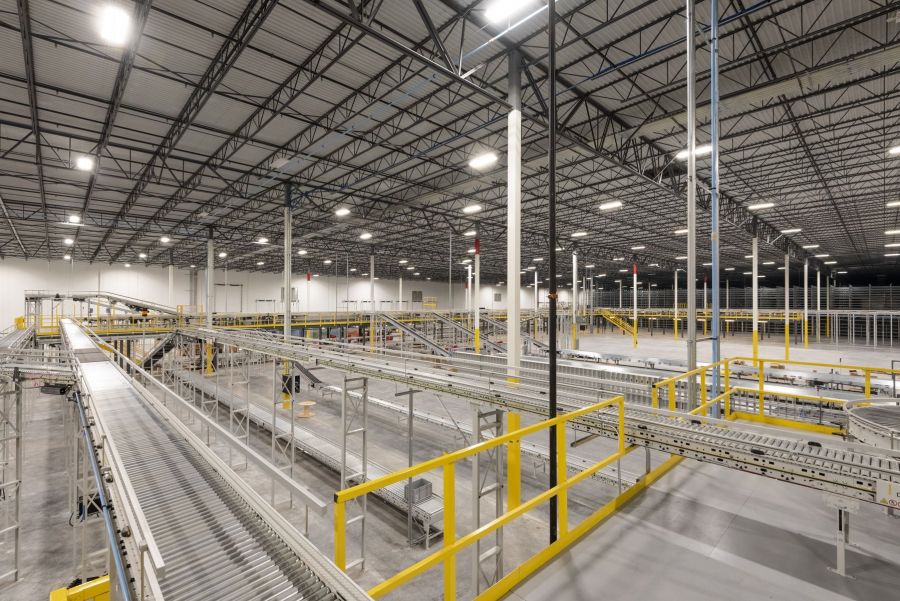
Industrial projects often operate under aggressive delivery schedules tied directly to occupancy, manufacturing timelines, or distribution demands. We focus heavily on coordination and quality control so speed-to-market pressure does not compromise long-term facility performance.
Projects like Infarm or Sally Beauty show why our team looks beyond the building’s shell and considers how the space will perform once people, equipment, materials, and products move through it every day.
Gordon Highlander approaches industrial projects with a strong focus on operational performance and long-term scalability, including:
- Truck circulation and site access
- Durable infrastructure systems
- Long-term power capacity
- Flexibility for future growth
- Coordination around automation and production needs
Building What Texas Needs Next
These projects support patient care, manufacturing, logistics, distribution, jobs, and long-term community needs. As these environments become more specialized, contractor selection becomes increasingly important.
According to Nick Campbell, there is very little crossover between healthcare and industrial construction teams because each environment requires different expertise, communication styles, and operational coordination. “That’s why we’re successful in both,” he says. “We’ve invested in the expertise in both sectors.”
At Gordon Highlander, our experience in specialized commercial construction helps us understand the planning, coordination, and communication these projects require.
Successful facilities start with thoughtful planning. If your organization is preparing for a healthcare expansion, industrial facility, or complex project in a growing Texas market, let’s talk about how our team can support your next build.